Cookie Clicker
- 4.5
- Rating
- 5.00M
- Installs
- Free
- Price

 Analysis by App-foxy
I expected a simple tapping diversion, but Cookie Clicker quickly showed me why this particular idle game has lasted in people’s routines. The basic action is obvious: make cookies, spend them on improvements, and let the bakery grow while you are away. What makes the experience interesting is the gradual shift from active clicking to planning. I started by watching every increase, then found myself thinking about which purchase would help the next stage most and when it was worth returning to the game.
Developed by DashNet B.V., this free simulation game is built around a deliberately narrow idea. There is no complicated map to learn, no character build to manage, and no demanding reflex challenge. Instead, the pleasure comes from turning a tiny action into an absurdly large production chain. That simplicity is both its strongest quality and its main warning: if you need constant variety, Cookie Clicker may feel repetitive long before its systems become satisfying.
How the free model affects the experience
The important starting point is that Cookie Clicker is free to download. That makes it easy to try without committing money first, which suits an idle game especially well because its appeal can take a little time to reveal itself. I could open it for a short session, understand the central loop immediately, and decide for myself whether the slow accumulation felt rewarding.
You May Also Like

 Blood Strike: 2.5 Anniversary
Blood Strike’s Loadouts Turn Every Drop Into a Tactical Gamble
A close look at Blood Strike’s custom loadouts: how fast access to signature weapons reshapes its battle royale rhythm, rewards preparation, and narrows the gap between fights.

 Pandora - Music & Podcasts
Pandora’s Music Is Easy to Start, but Harder to Recover
Pandora’s strength is its low-effort path from a seed to a station. Its weak spot is how much confidence it asks you to place in connection, setup, and quiet recovery.

 8 Ball Pool
 Is Built on Rivalries, Rematches, and Routine
A close look at the rivalries, rematches, shared routines, and unanswered safety questions that turn a quick pool match into a persistent mobile community.

 Samsung Music
’s Quiet Strength Is Playing What You Already Own
Its reach comes less from spectacle than from dependable access to a personal library. That simplicity is both the app’s strongest retention engine and its ceiling.

 AccuWeather: Weather Radar
AccuWeather Review: A Quick, Clear Forecast for Everyday Decisions
For everyday plans, the best forecast is the one you can understand quickly. AccuWeather makes rain timing, radar, and local conditions easy to act on, with a few trade-offs.

 Hill Climb Racing
Why Hill Climb Racing Still Turns Crashes Into One More Run
A tiny car, a bumpy hill and one more upgrade: Hill Climb Racing keeps resurfacing because its simple chaos makes every near-miss feel personal.
More From Our News Desk



Free access does not automatically make a game good value, of course. In this case, the value depends on whether you enjoy gradual progress more than constant interaction. The game gives you a long-term project rather than a compact challenge with a clear finish. If you like checking progress between other activities, that can feel generous. If you prefer a game that delivers its best moments in a single sitting, the same design may feel like waiting.
I also appreciate that the price does not pressure me to justify a purchase before I know whether the format suits me. A free idle game is easy to test during a commute, a break, or a quiet evening. The sensible approach is to treat that first period as an experiment: play actively for a while, leave it alone, return later, and see whether the accumulated progress creates genuine satisfaction rather than merely encouraging another check.
The game is rated for Everyone, and its presentation is approachable enough for players who are new to simulation games. The current version is 8, and it runs on devices using Android 7.0 or later. Those details make it a practical choice for people using older compatible phones, although the quality of the experience will still depend on the device and on whether the player enjoys reading small amounts of information while making choices.
The loop is simple, but the decisions slowly become more meaningful
At first, the most obvious strategy is to click frequently and buy whatever becomes available. That works as an introduction, but it is not the most interesting way to play for long. The game becomes more engaging when I stop treating every purchase as an automatic upgrade and start considering its timing. A cheaper improvement may help immediately, while a larger purchase can change the pace of future growth. The right choice depends on whether I am about to keep playing or leave the game alone.
That distinction is one of the most useful habits I developed. Before closing the game, I prefer to make a purchase that improves the unattended phase rather than one that only feels powerful during active clicking. When I know I will have time to play again soon, I can favor choices that make the current session more lively. This small change turns the game from a button-pressing routine into a simple planning exercise.
Another practical habit is resisting the urge to spend everything the moment I can afford something. Holding a reserve gives me flexibility when a more useful option appears. I found that this matters particularly when the next purchase is close enough to reach with a little patience. Spending impulsively can produce a pleasant short-term jump but leave the bakery feeling slower afterward.
That is a non-obvious strength of the design: the game teaches opportunity cost without presenting itself as a serious strategy title. Every cookie is both a reward and a possible investment. The numbers are playful, but the decision pattern is familiar from management games. I am constantly asking whether immediate output, future efficiency, or a better return from idle time matters most right now.
Why the absurd theme works better than a plain counter
A generic idle game could show only a currency rising on a screen. Cookie Clicker gives that process a memorable identity by making the production goal deliberately ridiculous. The growing bakery feels less like a spreadsheet because the theme keeps escalating the joke. I found that the playful framing made repetitive progress easier to tolerate, especially during the slower parts when the next meaningful improvement was not close.
The humor does not turn the game into a story-driven experience. I would not recommend it to someone looking for characters, dialogue, exploration, or a carefully paced campaign. Its personality comes from the contrast between a harmless baked good and the exaggerated ambition of building an enormous production machine. That is enough to give the numbers a little emotional flavor without distracting from the management loop.
The presentation also supports short visits. I do not need to remember a complicated plot or reconstruct a mission objective after several hours away. I can return, inspect the current state, collect the result of earlier decisions, and choose the next step. That low memory requirement is ideal for a game kept alongside daily tasks.
How I would use it in an ordinary day
My favorite way to play is in small windows rather than in one long session. I might open the game while waiting for an appointment, make a few active decisions, and close it before the experience starts to feel mechanical. Later, I can return and see what the earlier setup achieved. The game works particularly well when it remains a background hobby instead of demanding to become the main event.
There is also a useful rhythm for people who dislike constant notifications or interruptions. I can decide on a personal schedule for checking progress rather than allowing the game to dictate every spare moment. For example, I might look at it once during a break and once in the evening. That approach preserves the satisfaction of accumulation while reducing the temptation to tap without thinking.
For a younger player, the game can offer an approachable introduction to resource choices: save or spend, improve now or prepare for later, and distinguish active effort from passive progress. For an adult, the appeal is more likely to be the calming routine and the small sense of control over a system that keeps moving. Neither use requires expert knowledge, but both benefit from treating the game as a light hobby rather than a task that must be optimized constantly.
Where the value is strongest, and where it falls short
I find the value strongest when I treat each visit as a small planning check: decide what to buy, prepare for time away, and then close the game instead of tapping on autopilot. That makes its free entry point especially useful, since I can test whether this patient style suits me without first spending money. The trade-off becomes clearer when I compare that relaxed routine with the pressure some players feel to keep checking.
The best parts are patience, planning, and easy re-entry
The clearest value is the amount of decision-making available without a complicated control scheme. I can play with one hand, understand the immediate goal, and still find room to improve my approach. The game rewards patience, but it does not require me to sit through a long tutorial before I can participate. That balance makes it more approachable than many management simulations.
It also has a strong re-entry point. When I return after a break, I am not punished for forgetting a detailed sequence of actions. I can inspect the bakery, decide what the current bottleneck is, and continue. This is a meaningful advantage over strategy games that expect regular attention to avoid falling behind in a campaign.
The game’s scale is another source of value. The premise starts small, but the sense of expansion gives each stage a different emotional texture. Early progress feels hands-on; later progress feels more like supervising a system. That change keeps the central action from being completely static, even though the basic objective remains the same.
Its audience is substantial: the game has passed five million installs, with an average rating of 4.5 from around thirty-eight thousand ratings. Those figures do not prove that every player will enjoy it, but they do reflect a broad interest in this particular blend of humor, accumulation, and low-pressure simulation. I see that popularity as evidence that the concept connects with more than just dedicated idle-game fans.
The main trade-off is repetition disguised as progress
My biggest reservation is that the game can make activity feel meaningful even when I am mostly repeating the same pattern. Clicking, buying, waiting, and checking again is the core structure, not a temporary introduction. The later layers may make decisions more interesting, but they do not transform the game into a different genre.
That means the experience is not ideal for someone who needs frequent surprises. Players who want new environments, changing objectives, or direct competition may find the long accumulation curve too passive. A traditional management game is probably a better choice if you want to balance staff, space, schedules, or clearly defined scenarios. A puzzle game is better if you want every minute to test a new idea rather than extend a production total.
There is also a psychological trade-off in idle design. The game makes it easy to think, “I will just check once more,” because there is always another improvement to consider. I recommend setting a stopping point before opening it if you are trying to keep your playtime limited. The free price removes a financial barrier, but it does not remove the need to decide whether the attention it receives is worth the time.
Another limitation is that optimization can reduce the charm. Once I start calculating every choice too rigidly, the playful bakery theme becomes secondary to efficiency chasing. That is not a flaw for players who enjoy numbers, but it is worth knowing that the game supports two very different moods: relaxed progress and increasingly deliberate optimization. The first is easier to sustain; the second can make the experience feel like work.
Small habits that make the system more enjoyable
I get better results by separating active and inactive play. During active sessions, I focus on choices that make immediate interaction worthwhile. Before leaving, I prepare the bakery for unattended growth. This prevents me from judging every purchase by the wrong standard and gives each visit a clear purpose.
I also avoid opening the game only when I am bored and expecting it to create excitement instantly. Cookie Clicker is better when I already want a quiet, incremental activity. If I need a strong burst of entertainment, I choose something with direct goals instead. Knowing that difference prevents the game from feeling disappointing simply because I asked it to provide the wrong kind of pleasure.
A third useful approach is to keep the interface mentally organized by priority. I look first at what improves the next realistic milestone, then at what supports longer-term growth, and only afterward at tempting purchases that offer a smaller immediate benefit. This keeps the session from becoming a sequence of automatic taps and makes the simulation feel more like a personal strategy.
Finally, I treat progress as optional rather than precious. If I miss a day, I do not consider the game ruined. The relaxed structure makes it possible to return without rebuilding a complicated plan. That is a real advantage for casual players, but it also means anyone seeking strict daily goals may find the experience too forgiving and directionless.
Who should download it, and who should skip it?
I would recommend it to players who enjoy incremental rewards, light resource management, and games that can sit quietly in the background. It is especially suitable if you want something that can be understood in minutes but revisited over a longer period. The free entry point makes it easy to test, and the Everyone rating broadens its appeal for households looking for a simple simulation rather than an intense action game.
It is also a good match for people who enjoy turning small choices into better routines. Saving for a stronger improvement, choosing when to play actively, and preparing for a period away from the screen are modest decisions, but they create enough structure to keep the loop from being completely empty. I found that the game was most satisfying when I gave myself a loose plan instead of chasing every available action.
I would skip it if repetitive clicking and waiting already sound unpleasant. The bakery theme is charming, but it cannot disguise the fact that the game asks you to accept gradual progress as its main reward. Players looking for a story, a competitive ladder, fast reactions, or a finite campaign should choose another type of game. Even fans of simulation may prefer a title with more direct control if they want every outcome to come from an immediate action.
For parents considering it for a child, the simple premise and Everyone rating are reassuring starting points, but I would still focus on play habits rather than assuming the game is automatically suitable for unlimited use. For adults, the same advice applies: free access is convenient, yet the real cost can be attention. The best experience comes from using it as a small break, not allowing it to fill every idle moment.
My final recommendation
After spending time with Cookie Clicker, I see it as a focused simulation rather than a conventional game with a broad range of activities. Its value comes from doing one thing patiently and giving that thing enough layers of choice to remain engaging. The free price makes the decision straightforward: try it, observe whether the accumulating bakery feels rewarding, and stop if the repetition never becomes satisfying.
The game has earned its audience because it understands the appeal of visible progress. A tiny action becomes a management problem, then a routine, then a long-term experiment in timing and restraint. I especially like that I can play it in short visits without losing the thread, and that I can make the experience more thoughtful by planning around active and idle periods.
My verdict is a clear recommendation for patient players who want a low-pressure idle simulation game with a playful theme and almost no learning barrier. I would not recommend it as a replacement for a full management simulator or an action game. If you are curious, download it because the cost of entry is free, but give it an honest trial rather than assuming popularity guarantees enjoyment. Its real strength is turning waiting into a choice.
In my experience, that is enough to make the bakery worth revisiting, provided I remember what it is designed to be: a gentle, repetitive progression game, not an adventure waiting to unfold. DashNet B.V. has built a compact idea that can support both casual checking and deeper optimization. Whether that sounds relaxing or tedious will decide your answer more than any feature list.
FAQs for Cookie Clicker
01What is Cookie Clicker and how does the game work?
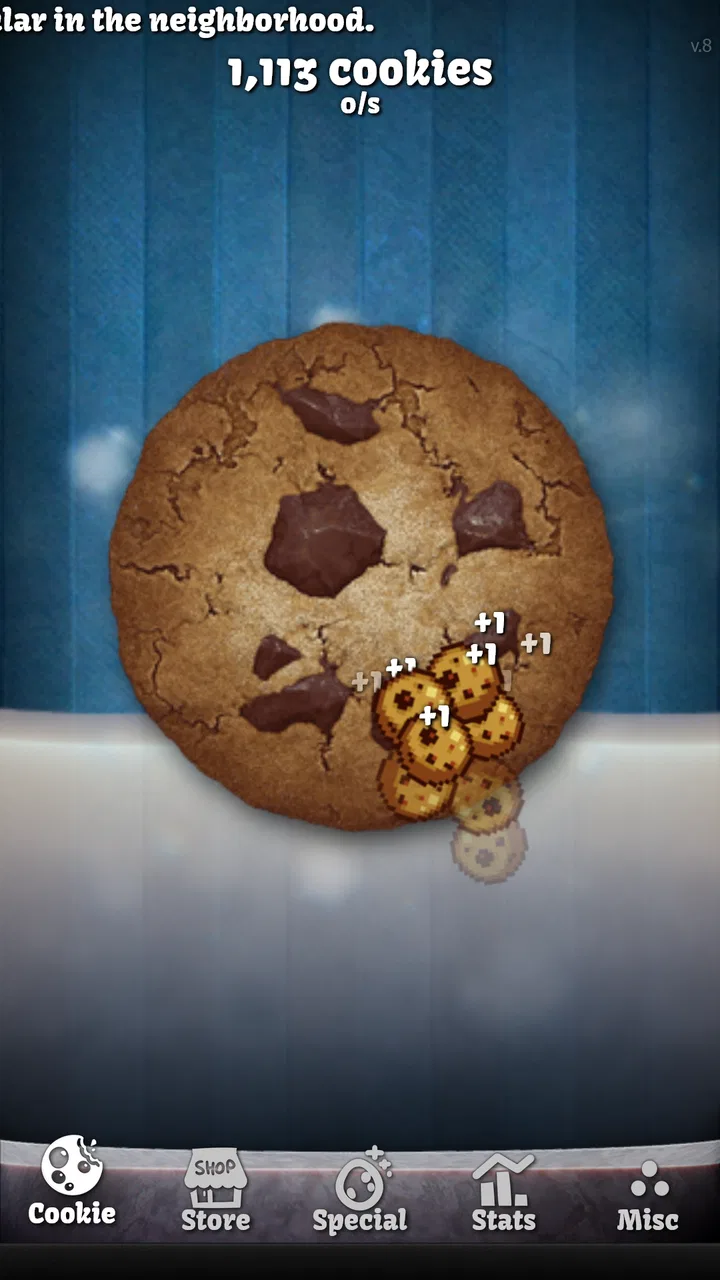
Cookie Clicker is an incremental idle game centered on producing as many cookies as possible. You begin by tapping a large cookie, then spend your earnings on cursors, buildings, upgrades, and special bonuses that automate production. As your bakery grows, progress increasingly happens in the background, allowing you to return later and collect the results of your decisions.
02Can I play Cookie Clicker offline?
Yes, Cookie Clicker is designed to remain enjoyable without a constant internet connection. You can usually produce cookies, purchase upgrades, and manage your bakery while offline, although some features may depend on the specific mobile version and its current implementation. It is still sensible to connect occasionally if you want cloud-related functions, updates, or advertising rewards where available.
03Does Cookie Clicker contain advertisements or in-app purchases?
Cookie Clicker may include optional monetization features depending on the platform, region, and version you download. Some releases can display advertisements or offer purchases connected with convenience features, while the core cookie-producing gameplay remains accessible without necessarily paying. Before installing, check the official store listing for the latest information about ads, purchases, and any platform-specific limitations.
04Will my Cookie Clicker progress be saved automatically?
The game generally saves progress automatically, which is important because Cookie Clicker is built around long-term development rather than short play sessions. However, automatic saving should not be treated as a complete backup solution. If the version you use provides export, import, account, or cloud-save options, use them before changing devices, reinstalling the app, or clearing its data to reduce the risk of losing your bakery.
05Is Cookie Clicker suitable for children and casual players?
Cookie Clicker is easy to understand because its main objective is simply to produce cookies and buy improvements, making it approachable for casual players. Nevertheless, it is highly repetitive and intentionally encourages frequent checking and long-term optimization. Parents should review the current age rating, advertising details, and purchase settings, especially if children use the device, while players seeking action or a traditional story may find the pace too passive.
Pros
- Simple gameplay that is easy to understand within seconds.
- Runs well on most modern phones with modest hardware demands.
- Many upgrades and achievements provide long-term goals.
- Offline progress lets the bakery keep producing while you are away.
- Distinct cookie-themed humor adds charm to the incremental format.
Cons
- Progress becomes increasingly slow without frequent upgrades or waiting.
- The interface can feel cluttered after many buildings and upgrades appear.
- Heavy tapping may become repetitive during the early stages.
- Some features unlock only after investing considerable playtime.
- Notifications and background activity may be distracting for some players.

Cookie Clicker
Gallery